What is CROSSNote?
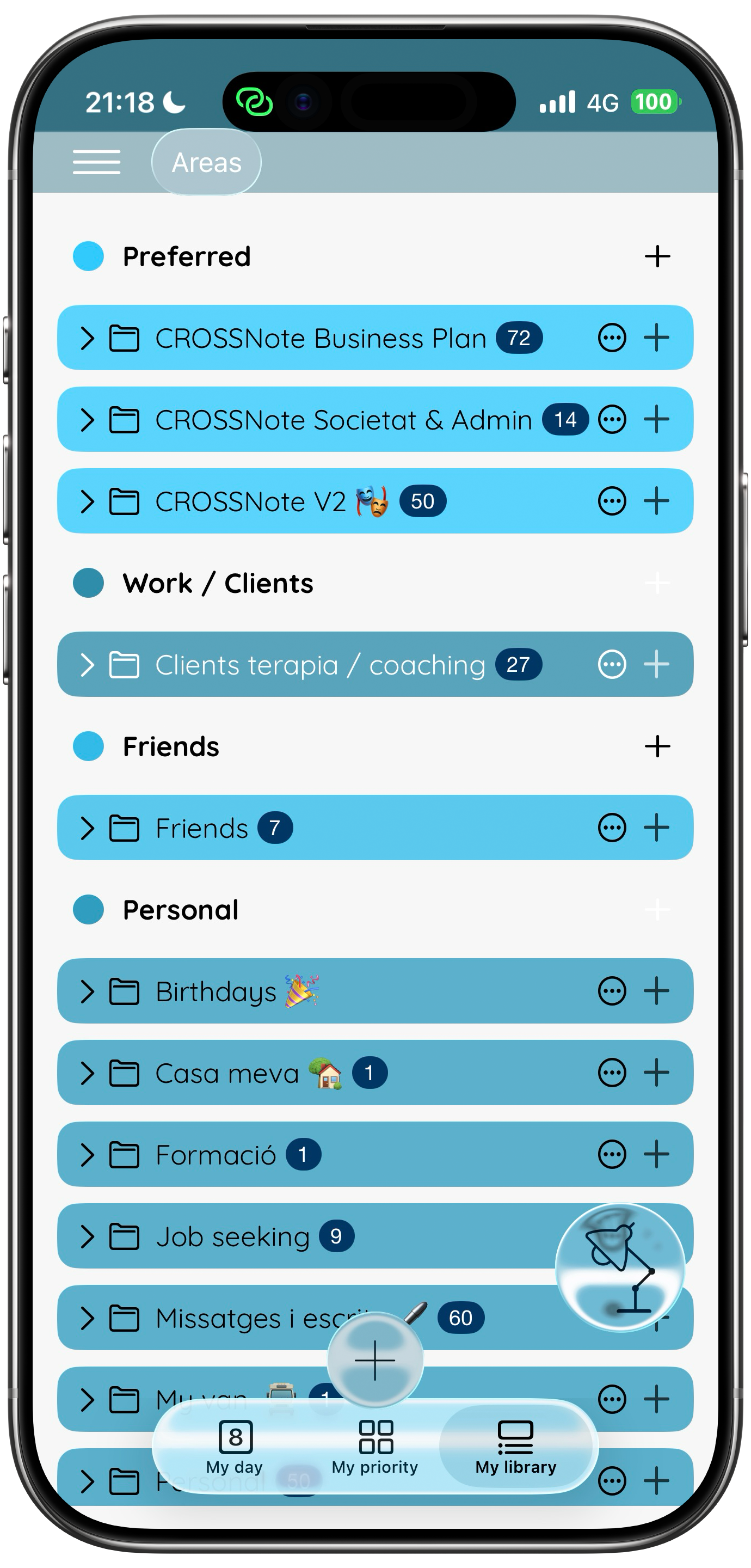
CROSSNote is a holistic life management platform designed to help people understand and organize how they live their time — not just how they fill it.
Most digital tools focus on managing schedules, tasks, and outputs. CROSSNote starts from a different premise: time is not neutral, and productivity cannot be separated from the mental, physical, and emotional condition of the person living the day.
The platform is built to support awareness, balance, and coherence between what people plan, how they feel, and what they are ultimately moving toward in their lives.
Rather than optimizing for speed or volume, CROSSNote aims to support informed decision-making. It helps users see their commitments in context, recognize limits, and adjust expectations based on real conditions such as energy, stress, and recovery.
A day seen as a living system
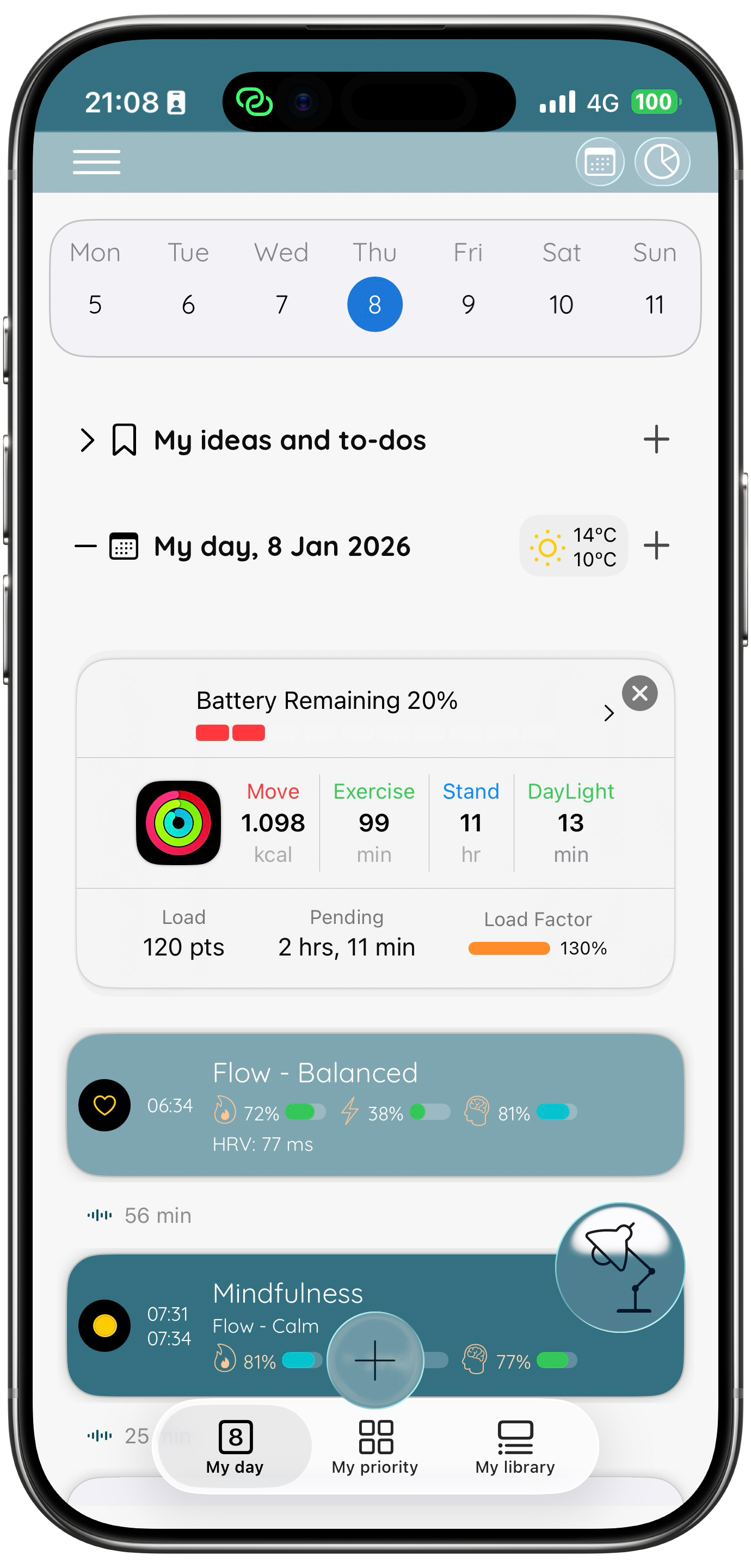
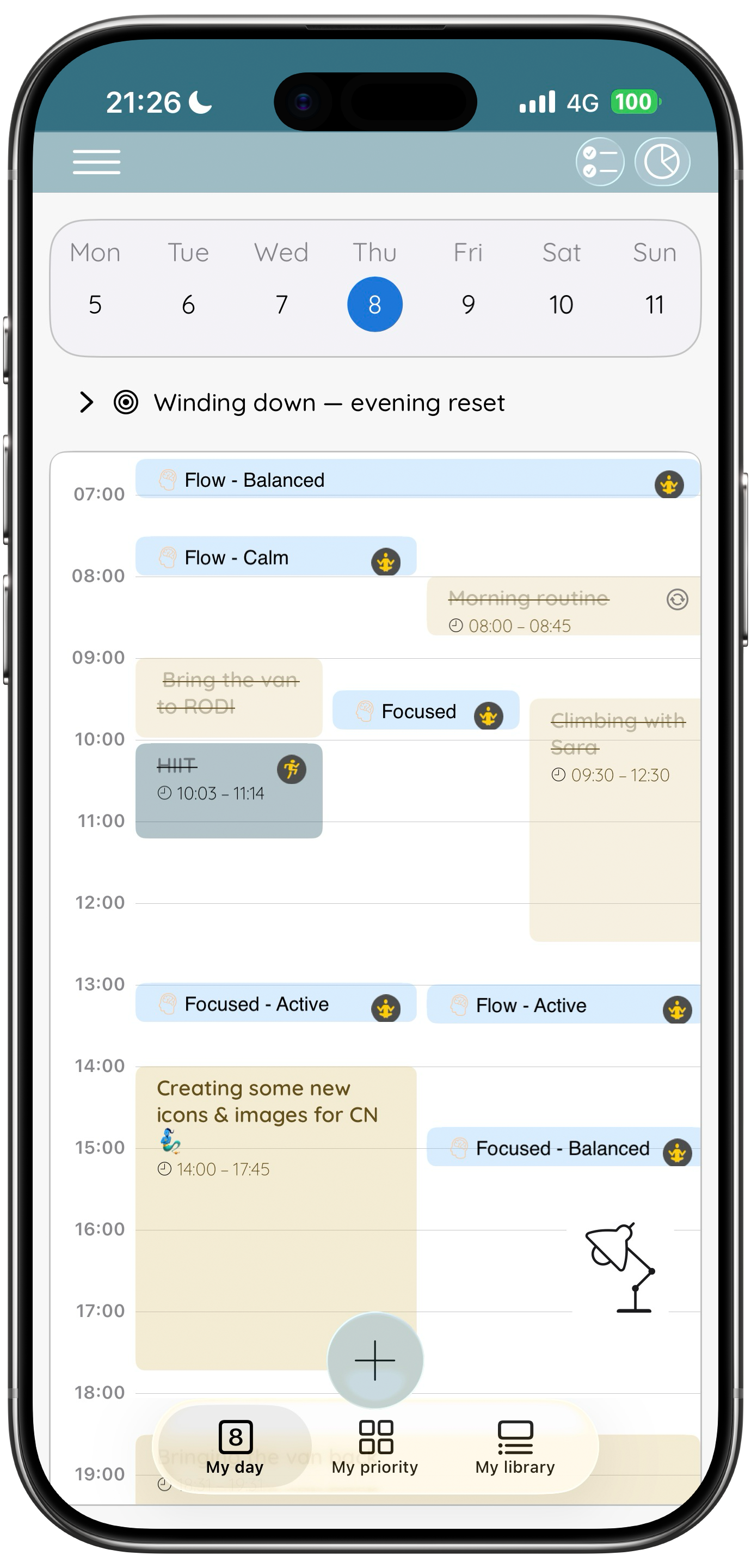
At the center of CROSSNote is the concept of My Day: a view of daily life that brings together time, actions, ideas, health signals, and emotional state in one coherent space.
Instead of treating the calendar as a static list of appointments, CROSSNote presents the day as a dynamic system. Events, tasks, trainings, and other activities interact with each other and with the user’s available focus and energy. The platform makes these interactions visible, helping users understand not only what is scheduled, but how demanding the day is and how it feels to live it.
Flow states, focus levels, recovery indicators, and workload context allow the day to be interpreted rather than simply executed. This helps reduce reactive behavior and supports more conscious pacing throughout the day.
Planning that respects energy and recovery
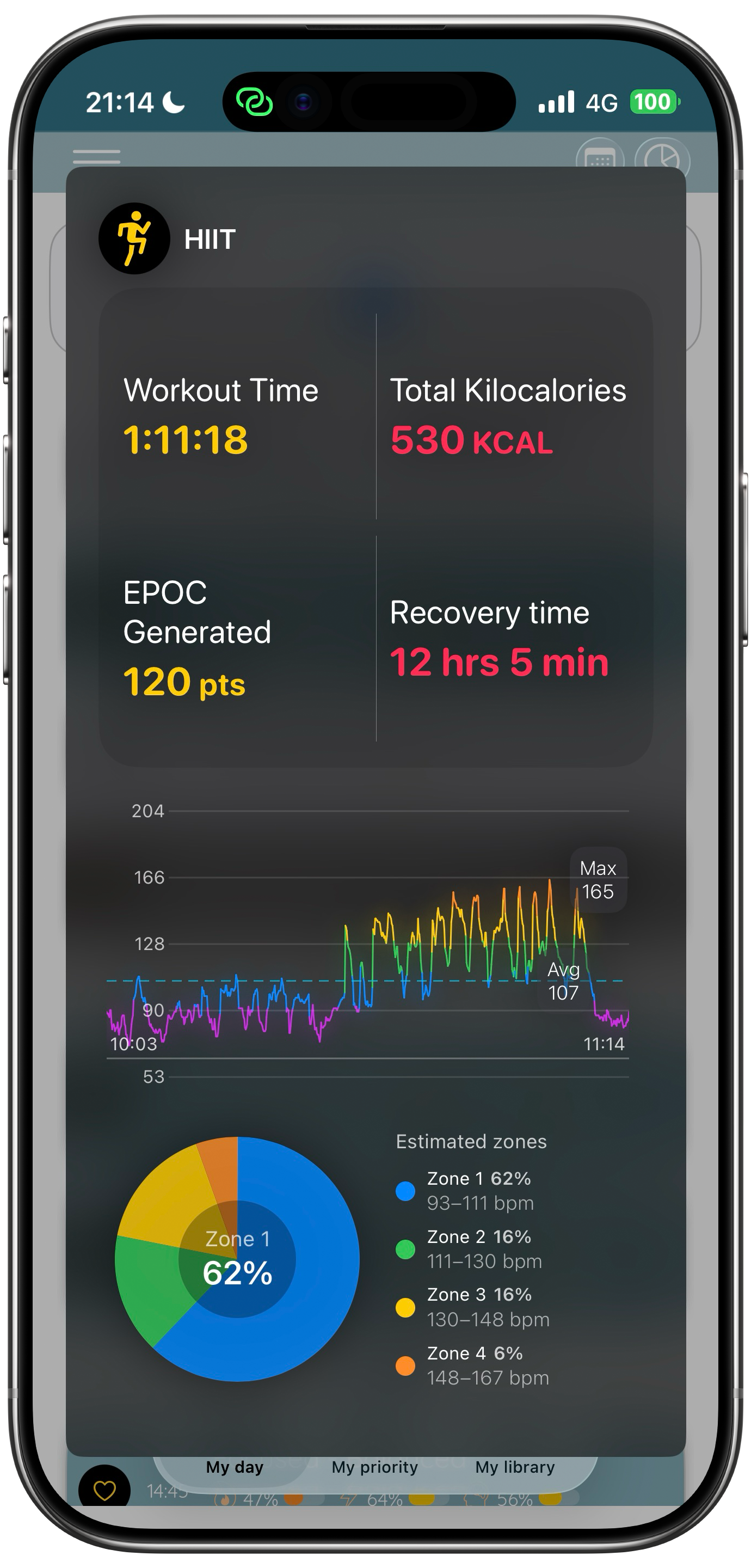
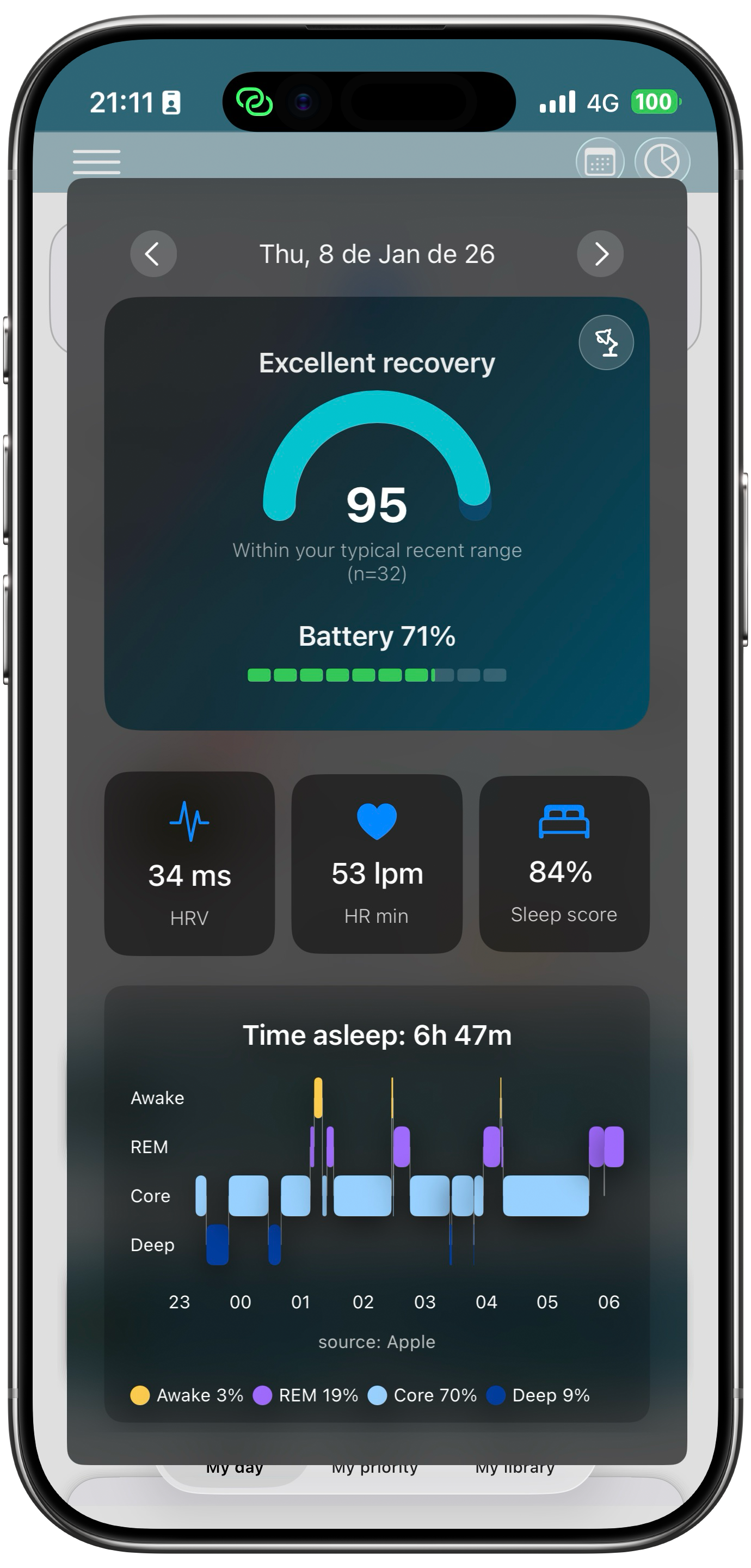
CROSSNote integrates optional health and activity data to provide a clearer picture of the user’s current capacity. This may include information related to sleep quality, recovery, heart rate variability, physical load, and recent activity patterns.
These signals are not used to push performance or enforce goals. Instead, they serve as contextual information that helps users understand their limits and make adjustments when needed. A day with low recovery looks different from a well-rested one, and CROSSNote is designed to reflect that difference clearly.
By making energy and recovery visible alongside commitments, the platform supports sustainable rhythms and helps prevent chronic overload. Productivity becomes adaptive rather than rigid, responding to the person’s real condition instead of ignoring it.
Goals beyond tasks
CROSSNote makes a clear distinction between tasks and intentions.
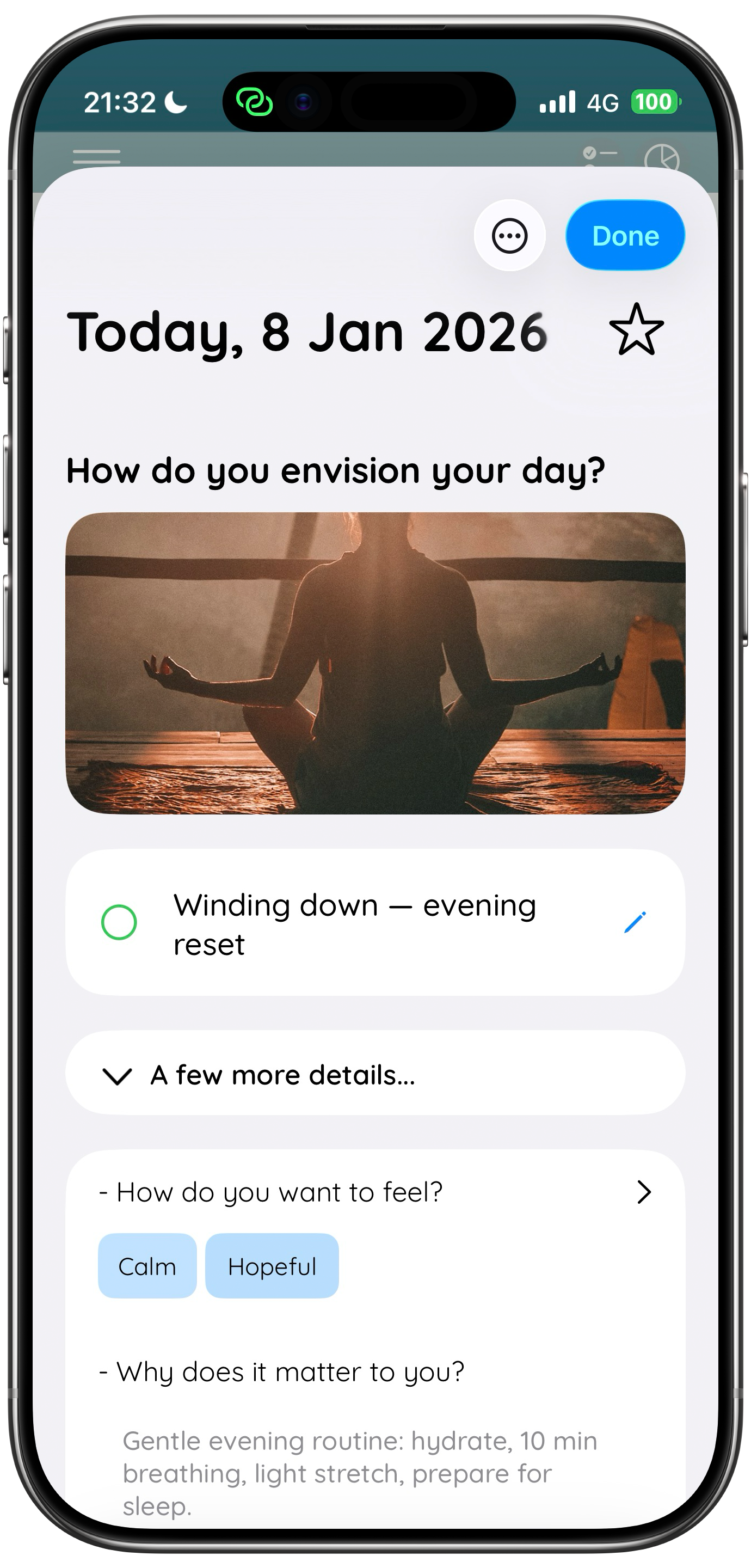
While tasks represent concrete actions to complete, goals within CROSSNote can reflect broader directions: emotional states, values, priorities, or ways of being. Daily and weekly intentions help users stay oriented toward what truly matters, even when the day becomes busy or unpredictable.
At the beginning of the day, users can set an intention that reflects how they want to approach the day or how they want to feel. At the end of the day, the platform encourages reflection, closing the loop between planning and lived experience.
Short written reflections, mood indicators, and visual snapshots help transform days into meaningful records rather than forgotten sequences of tasks. Over time, this creates continuity and self-awareness across days and weeks.
Capturing ideas without friction
Ideas, thoughts, and important fragments rarely arrive at convenient moments. CROSSNote includes flexible spaces to capture information quickly, without requiring immediate categorization or structure.
Users can record text notes, voice recordings, images, or quick thoughts as they arise. These elements can later be reviewed, organized, linked to events or tasks, or simply kept as references.
This approach reduces cognitive load and minimizes interruptions. Nothing important is lost, and users are not forced to decide immediately how every piece of information should be used. Structure can come later, when there is more clarity and time.
Focused work and Pomodoro support
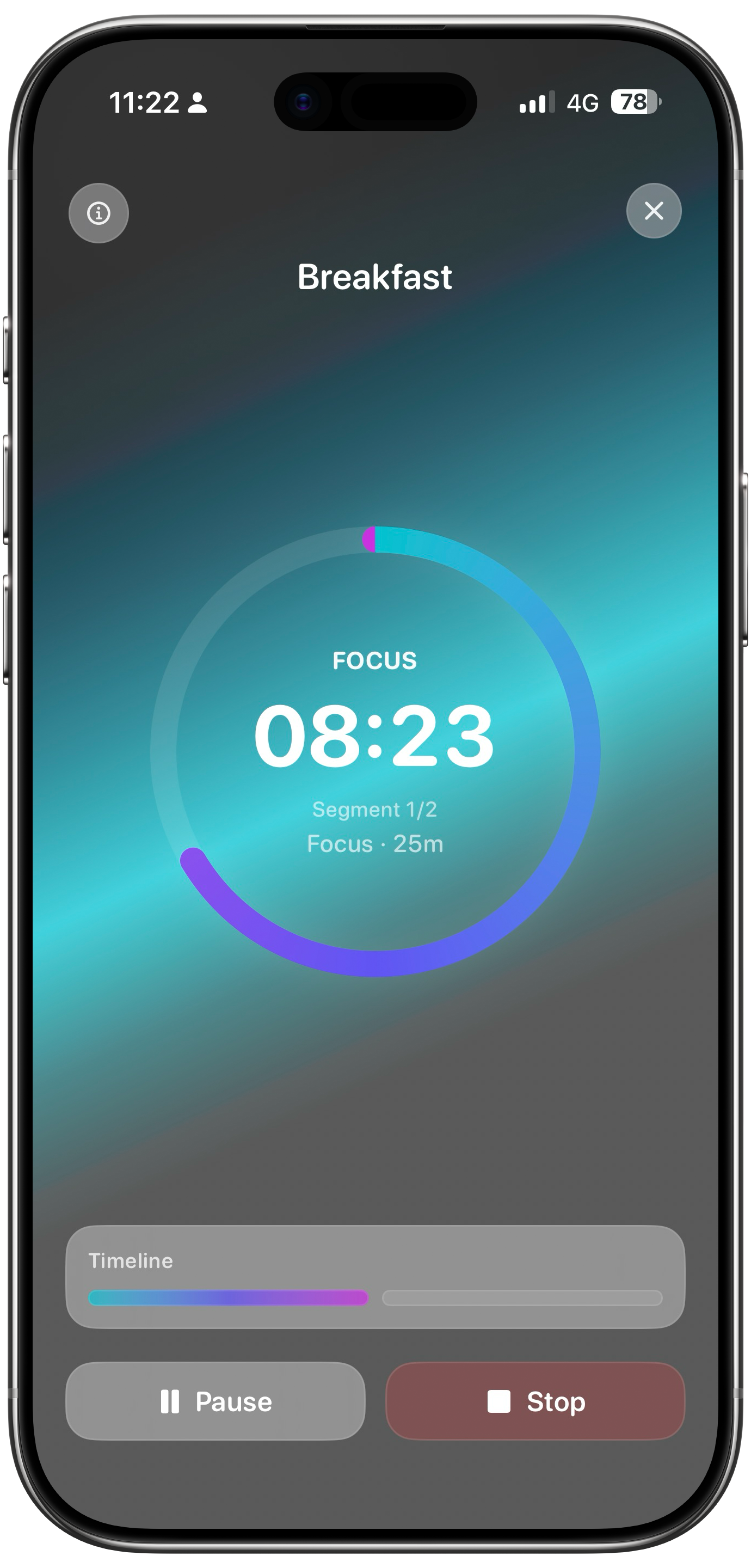
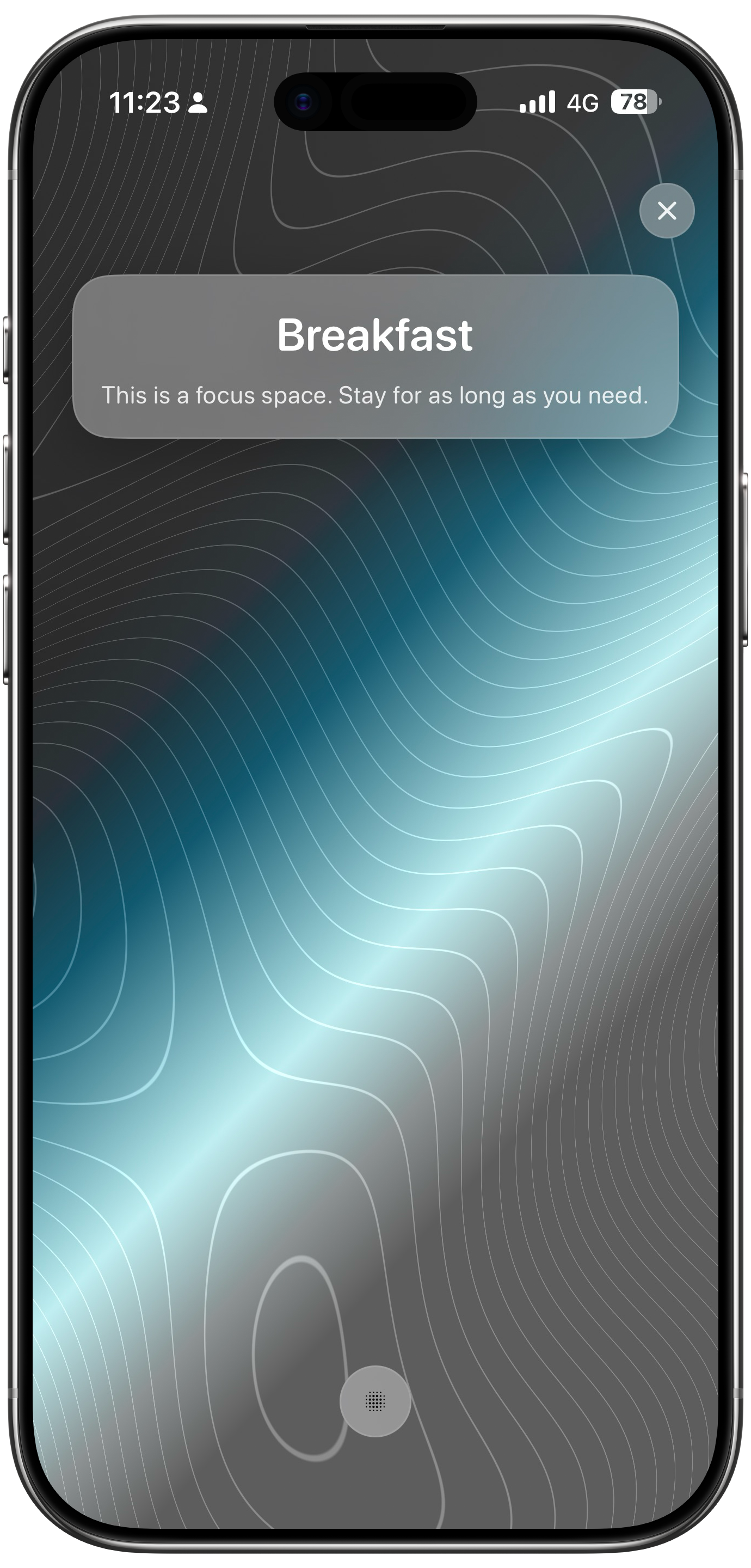
CROSSNote includes dedicated focus tools designed to support deep work without turning productivity into a performance metric. Tasks can be approached using an integrated Pomodoro-style flow, where work and rest intervals are applied directly within each task, respecting time boundaries and personal pacing. For moments when structure is not helpful, CROSSNote also offers a pure focus mode: a calm, distraction-free screen designed to remove visual noise and external stimuli, allowing attention to settle on a single activity. Both approaches are intentionally lightweight and non-judgmental. They are designed to support concentration for neurodivergent users as well as for anyone who benefits from structured or minimalist focus methods, without measuring output, rewarding intensity, or penalizing pauses. The goal is to protect attention and presence, not to quantify or enforce productivity.
Artificial intelligence as illumination, not control
Artificial intelligence in CROSSNote is designed as a layered support system, not as a decision-making authority. Its role is to provide clarity and perspective, helping users better understand their information and their own patterns over time.
At a foundational level, AI assists with practical, task-oriented functions. This includes transcribing voice recordings, summarizing notes and documents, extracting key points from meetings or conversations, and helping break down complex tasks into smaller, manageable steps. These features reduce friction and cognitive load, allowing users to work with their information more easily without changing how they think or decide.
On a deeper level, AI in CROSSNote can work with the broader context of the user’s data — such as calendar activity, task history, reflections, and optional health signals — to help surface patterns that are difficult to see day by day. This may include recurring workload cycles, imbalances between effort and recovery, or relationships between productivity, energy, and stress.
Rather than optimizing for output, this contextual layer is designed to support balance and self-awareness. AI can suggest gentler rhythms, highlight tendencies toward overload, and help users reflect on whether their current habits are aligned with their well-being and longer-term goals.
At no point does the system dictate actions, impose goals, or enforce productivity models. User agency remains central. AI does not tell users what they should do; it helps them see more clearly what is already happening, so choices can be made with greater awareness and intention.
A long-term perspective on time and direction
CROSSNote is designed to prevent daily productivity from gradually disconnecting people from their broader life goals.
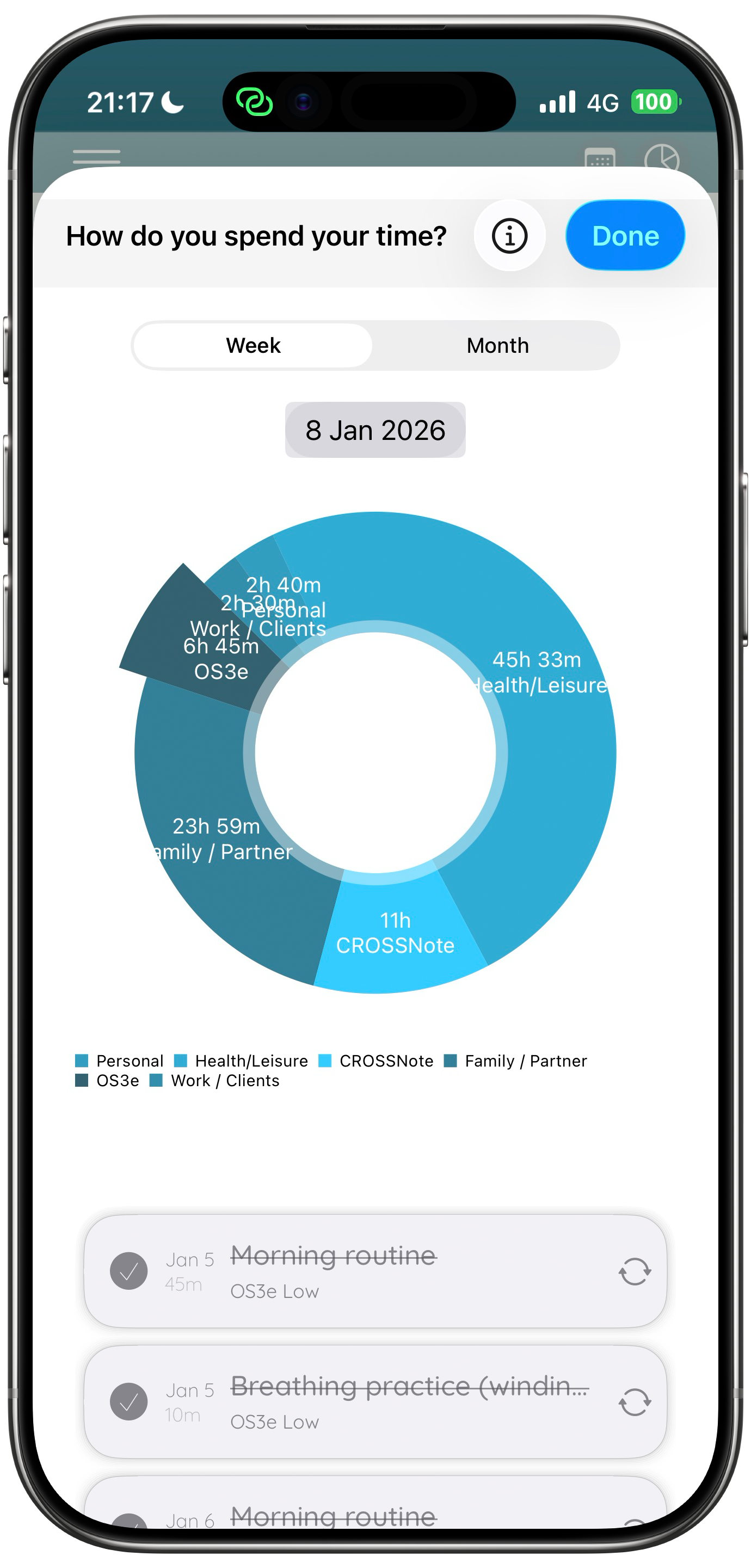
By linking daily actions with weekly, monthly, and longer-term perspectives, the platform helps users observe where their time and energy are actually going. Over time, this makes it easier to notice misalignment between intention and reality, and to make adjustments before frustration or burnout accumulate.
The platform encourages continuity, helping people maintain awareness of their personal direction while navigating the demands of everyday life.
Who CROSSNote is for
CROSSNote is built for people who want more than efficiency from their tools, and who feel that traditional productivity systems often overlook how life is actually lived.
It is designed for individuals managing complex personal and professional lives, where multiple roles, responsibilities, and contexts overlap. This includes people who think deeply about what they do, who care about meaning and direction, and who want their daily actions to remain connected to their values rather than becoming a sequence of disconnected tasks.
CROSSNote is intentionally designed to support neurodivergent users, including people with ADHD, autism, or other cognitive differences, as well as anyone who experiences heightened sensitivity to distraction, cognitive overload, or rigid productivity structures. The platform favors clarity, flexibility, and calm interaction patterns over strict rules, child gamification, or performance-driven feedback.
The platform also resonates with users interested in understanding themselves through data — including those drawn to biohacking, quantified self practices, or personal performance tracking. For these users, CROSSNote offers a way to integrate health, recovery, and activity signals into daily planning without reducing life to optimization metrics. Data is used to inform awareness and balance, not to push constant self-optimization.
It is also well suited for professionals in cognitively demanding, creative, or high-pressure environments, where attention, recovery, and mental clarity are essential. For these users, managing time is not only about scheduling, but about protecting focus, pacing effort, and maintaining long-term sustainability and avoiding any unneeded burnout.
More broadly, CROSSNote is for people who already live digitally and rely on calendars, tasks, and notes, but who are looking for a more integrated relationship with time, work, health, and personal life — one that supports awareness, balance, and continuity over time rather than constant acceleration.
In essence
CROSSNote is not about doing more.
It is about understanding how you live your time, choosing with awareness, and maintaining coherence between daily action, personal energy, and long-term purpose.